


Blogs
Types of Pickleball Paddles and Their Differences
Pickleball paddles vary by material, weight, and grip, each tailored for a unique playing experience. Whether you’re seeking power, control, or balance, knowing the differences between paddle types helps you choose the right fit for your playing style and skill level. All minor details can make or break your game; you must choose wisely.
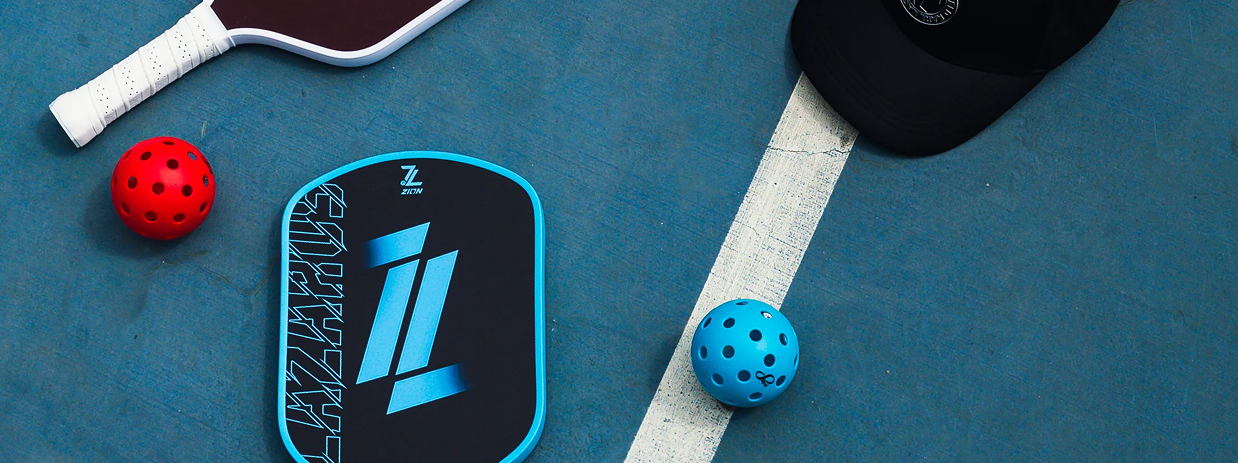
What Are the Main Types of Pickleball Paddles?
Graphite Pickleball Paddles These are lightweight, responsive, and ideal for quick hand movements. A favorite among experienced players.
Composite Pickleball Paddles Made with fiberglass/carbon fiber faces and polymer cores, these offer a great balance of power and control.
Wood Pickleball Paddles Budget-friendly and durable but heavier—best suited for beginners or casual games.
Shape (Wide‑body, Standard, Elongated) Wide-body (~8–8.5″ wide): Offers a larger sweet spot and is highly forgiving—ideal for beginners . Standard/hybrid (~7.5–7.9″): Balanced reach and control, commonly preferred by all levels . Elongated (>16″ long, <8″ wide): Adds reach, power, spin, but has a smaller sweet spot and less maneuverability.
Surface Material (Carbon Fiber vs others) Raw carbon Fiber (RCF/T700) is highly popular due to durability, spin capability, and responsiveness. Less common: fiberglass, Kevlar, aluminium laminate—varying in feel, power, and price.
Thickness (Core thickness e.g., 13 mm vs 16 mm) Thicker cores (16 mm) offer control and consistency; thinner (13 mm) boost power and “pop”. Thinner cores can feel livelier but are less forgiving for slower swing speeds.
Core Material (Polymer honeycomb vs foam vs Nomex, etc.) Polypropylene honeycomb: Standard, lightweight, balanced performance . Foam-injected cores: Added stability and larger sweet spot . Others: Nomex (power), aluminium (rigidity), wood (budget) .
Hot-pressed (Thermoformed) vs Cold-pressed Thermoformed paddles are moulded under heat & pressure → larger sweet spot, better consistency, and durability. Reddit feedback echoes enhanced power and forgiveness. Cold-pressed (Generation 1): Standard layup at room temperature, less expensive but slightly less stable.
Unibody vs Not Unibody (Gen‑2 thermoformed): Entire paddle moulded in one-piece, stronger edge-to-face bond Pre‑Gen‑2 models used edge guards; unibody reduces delamination risk.
Edge-guarded vs Edgeless/Tear‑formed Edge-guarded paddles have plastic rims to protect core. Edgeless/Tear-formed designs have thinner rails → cleaner look, may boost aerodynamics but can affect durability.
How Do Paddle Features Affect Performance?
Weight (Light vs. Heavy) Lighter paddles offer control and faster swings, while heavier ones deliver more power but may cause fatigue.
Grip Size & Handle Comfort Small grips enhance wrist action, while larger grips give more stability. Ergonomics matter for long games.
Paddle Core Material Polymer cores are soft and quiet; aluminum offers control; Nomex delivers speed and power.
FAQ
Which pickleball paddle is best for beginners?
Wood or composite paddles are budget-friendly and offer decent control—ideal for newcomers.
Are graphite paddles better than composite?
Graphite paddles offer more touch and responsiveness, but composite ones provide better balance and spin potential.
Does paddle weight affect gameplay?
Yes. Lighter paddles enhance control and mobility, while heavier paddles boost power shots.
What paddle material offers more spin?
Composite paddles, especially with textured surfaces, allow more spin on the ball.
How long does a pickleball paddle last?
With regular play, most quality paddles last 1–2 years before losing performance.
When it comes to pickleball, your paddle can be your greatest weapon—or your biggest weakness. That’s why understanding paddle types is crucial before hitting the court. From lightweight graphite paddles perfect for fast hands to composite ones that offer a sweet mix of power and control, each material brings something unique to your game. Wood paddles are great for beginners or casual play, but they’re heavier and less responsive. Then comes shape—whether you go for a wide-body for forgiveness, a standard shape for balance, or an elongated paddle for reach and spin, it all depends on how you like to play.
Surface materials matter too—raw carbon fiber is currently the crowd favorite for its durability and spin potential. Core thickness affects feel: thicker paddles (16mm) give you control, while thinner ones (13mm) pack more power. And don’t overlook the paddle’s inner build—polypropylene honeycomb cores are standard, while foam adds stability and Nomex brings the heat
You’ll also see terms like thermoformed, unibody, and edgeless, which refer to how paddles are built and how they perform under pressure. Thermoformed and unibody paddles are newer innovations known for power and durability, while edgeless paddles focus on sleekness and aerodynamics (though sometimes at the cost of core protection).
Finally, it’s not just the paddle, but how it fits you—lighter paddles give better control and agility, while heavier ones deliver power but can tire you out. Grip size and core material also play a big role in comfort and performance, especially during longer matches.
Related Blogs
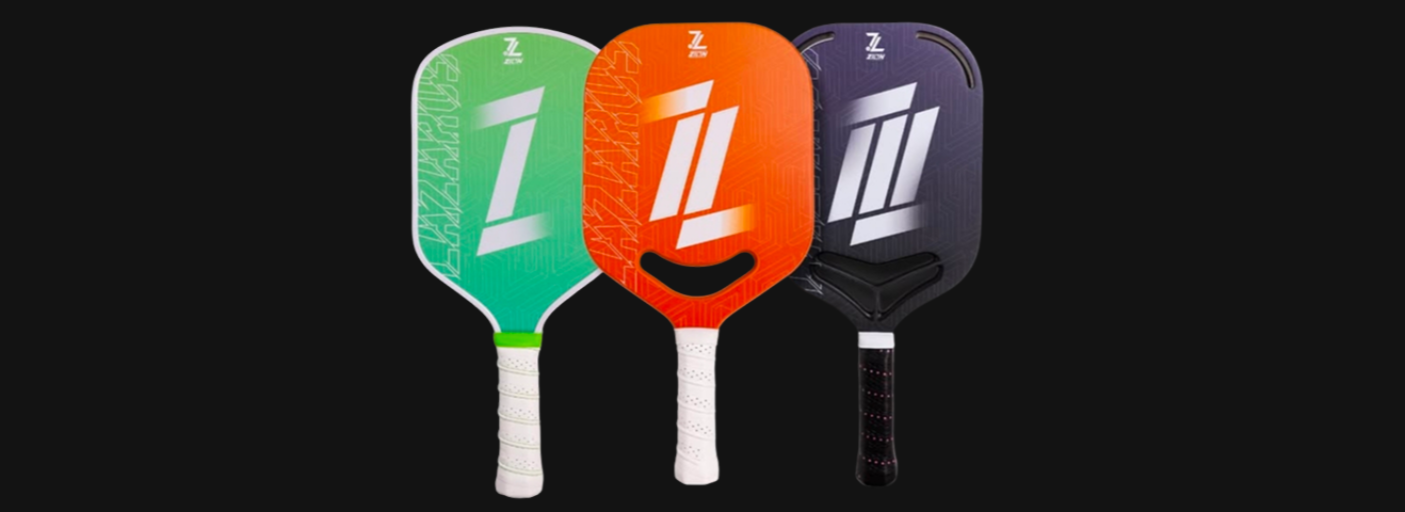
What to Look for in a Pickleball Paddle
A great pickleball paddle can improve your game, protect you
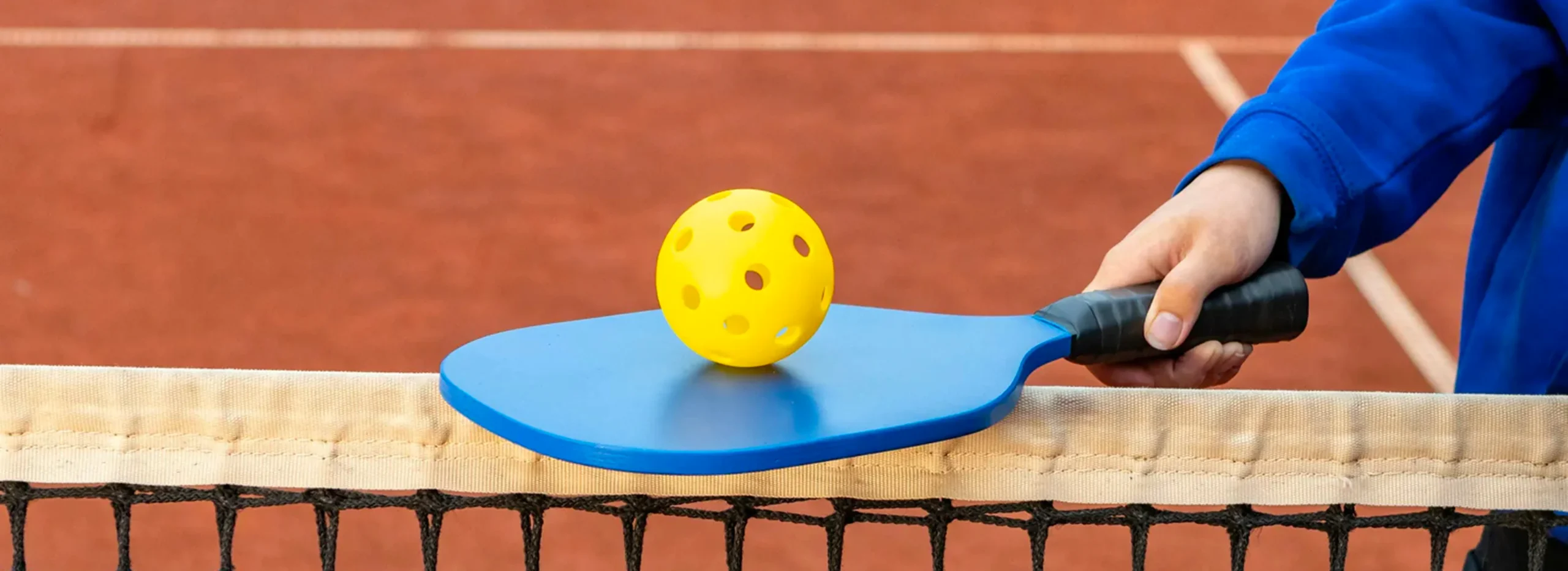
Difference Between Pickleball and Padel
Pickleball and padel are rising racket sports often confused with
Serve Strong
Start every rally with focus and energy.
Play the Kitchen Smart
Stay calm, control the soft
game, and win with strategy.
Rally On
Keep the ball moving, don’t give up on any point.
Game Point
Push for the finish with confidence and positivity.