

Blogs
Pickleball Court : Construction and Dimensions Guide
A pickleball court is a rectangular playing area specifically designed for the game of pickleball it has defined dimensions and layout rules. It shares similarities with badminton courts but has its own differences and requirements. Understanding its construction and setup ensures fair play, safety, and compliance with standard game regulations. You can’t play it right if your court isn’t in your favour.
What Are the Standard Pickleball Court Dimensions?
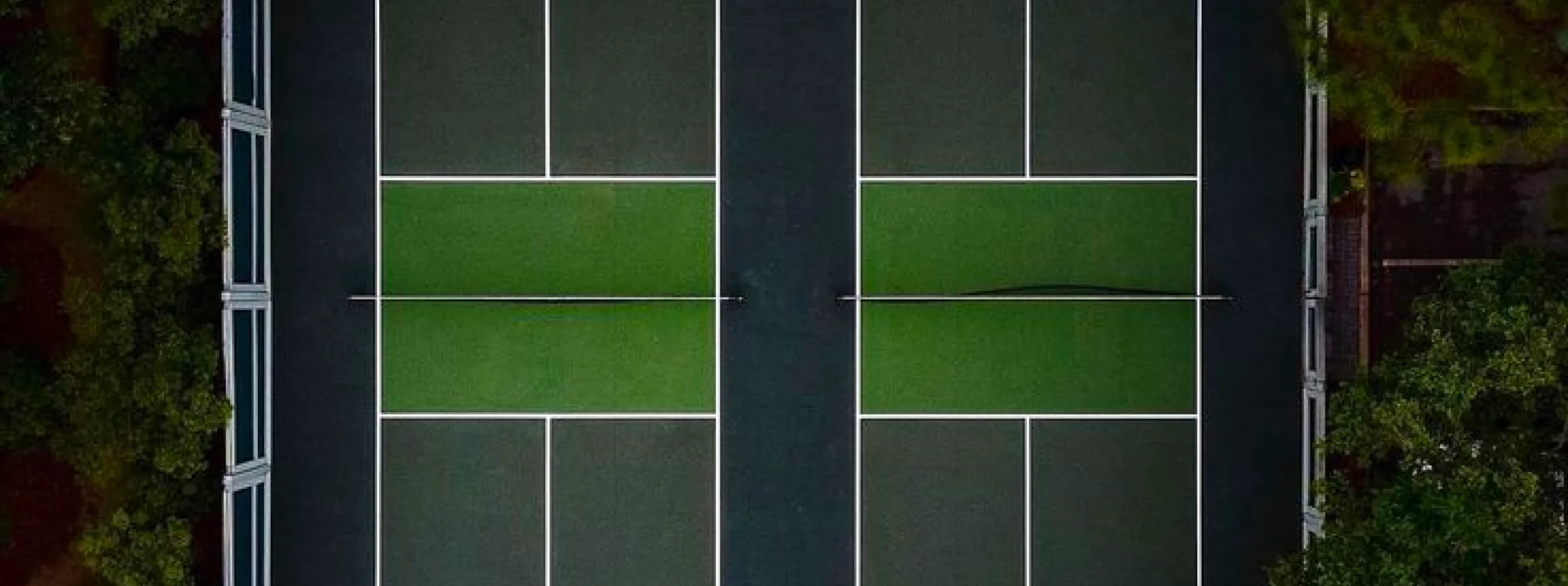
The Standard Official Dimensions and Layout: A standard pickleball court measures 20 feet wide and 44 feet long for both singles and doubles play on an average. The non-volley zone (kitchen) extends 7 feet from the net on both sides. The court is divided into left and right service areas to play in.
Space Around the Court: For optimal gameplay, allow a total playing area of 30 feet x 60 feet. This includes run-off space beyond the baselines and sidelines for safe and convenient player movement.
How to Construct a Pickleball Court? – Materials Used
Surface Requirements: Pickleball courts are best constructed on smooth concrete or asphalt with an acrylic coating. Beneath the surface, a layer of crushed stone or gravel is often added for proper drainage and stability.
Avoid slick or uneven surfaces that may cause injury. Balanced construction is the key.
Net and Post Installation: The net should be 36 inches high at the sidelines and 34 inches at the centre. Use strong centre straps and tensioned posts — make sure these fittings are aligned properly.
Indoor vs Outdoor Setup: Outdoor courts need UV-resistant paint and proper drainage. Indoor courts prioritize non-slip flooring and lighting. Both setups require different construction approaches.
Nets are held up by powder-coated steel or aluminium posts with durable nylon. Some high-end or indoor courts even include cushion layers beneath the surface to reduce impact on your joints. Extras like fencing, windscreens, and lighting round out the setup for a comfortable, functional playing experience.
FAQ
What is the standard size of a pickleball court?
A pickleball court measures 20 feet wide and 44 feet long, and this size remains the same for both singles and doubles play. It’s slightly smaller than a badminton court and significantly smaller than a tennis court, making it accessible and less physically demanding.
How much total space is needed to build a court?
For safe gameplay and enough movement space, you’ll need a total area of at least 30 by 60 feet. This includes essential run-off space beyond the baselines and sidelines, helping players move freely without risk of stepping off the court or colliding with barriers.
Can I convert a tennis court into a pickleball court?
Absolutely! Many public parks and sports clubs do this. You can overlay pickleball lines on a tennis court and use portable pickleball nets. One tennis court can even fit up to four pickleball courts side by side.
What surface is best for pickleball courts?
Acrylic-coated concrete or asphalt surfaces are ideal, as they provide grip, weather resistance, and consistent ball bounce. They’re also low-maintenance and long-lasting.
What is the kitchen in pickleball?
The kitchen is the 7-foot non-volley zone on either side of the net. Players are not allowed to volley the ball (hit it out of the air) while standing in this area, encouraging more strategic and controlled play.
How long does it take to build a pickleball court?
Building and surfacing a dedicated pickleball court typically takes about 60 days, depending on weather conditions and site prep work
How much does it cost to build a pickleball court?
In India, basic outdoor court construction ranges from ₹5–8 lakh, with premium options (fencing, lighting) costing ₹10–15 lakh
A pickleball court isn’t just a slab of pavement with a net — it’s a game-changer when built right. Officially, it’s 20 feet wide and 44 feet long, with a 7-foot “kitchen” zone on each side where volleying is off-limits (yes, it’s as serious as it sounds). But don’t forget the extra space—30 by 60 feet total—so players aren’t crashing into fences or each other mid-rally. The court layout borrows a bit from badminton, but pickleball plays by its own rules. When it comes to surfaces, smooth concrete or asphalt coated with acrylic is your best bet—because nobody wants to slip during a killer drop shot. The net should sit at 36 inches on the sides and dip to 34 inches in the centre (precision matters!). Outdoor courts need UV-resistant paint and drainage, so they don’t turn into splash zones, while indoor courts focus more on grip and lighting. You can even convert a tennis court if you’re clever with the markings and bring in a portable net. Whether you’re building from scratch or repurposing space, the goal is a court that feels good, plays fair, and looks sharp. And once your court’s ready?
Related Blogs
What to Look for in a Pickleball Paddle
A great pickleball paddle can improve your game, protect you
Difference Between Pickleball and Padel
Pickleball and padel are rising racket sports often confused with
Serve Strong
Start every rally with focus and energy.
Play the Kitchen Smart
Stay calm, control the soft
game, and win with strategy.
Rally On
Keep the ball moving, don’t give up on any point.
Game Point
Push for the finish with confidence and positivity.