Blogs
What to Look for in a Pickleball Paddle?
A great pickleball paddle can improve your game, protect you from injury, and match your style of play. This quick guide helps you understand paddle weight, grip size, surface material, and shape — so you can choose confidently, whether you’re a beginner or upgrading your gear.
Why Your Paddle Choice Matters?
Your paddle directly affects your control, power, comfort, and overall game. Using the wrong paddle can lead to poor performance or injuries like “pickleball elbow.” The right paddle supports your strengths and playing style.
Paddle Weight and Control
Light paddles (6.7–7.3 oz): offer speed and control but less power
Midweight paddles (7.3–8.4 oz): offer balanced power and control — great for most players
Heavy paddles (8.5+ oz): deliver power but may strain your arm over time
Most beginners should start with a midweight paddle for balance.
Core Material Options
Pickleball paddle cores come in three main types:
1- Polymer: Quiet, soft, and control-focused (best for beginners).
2- Nomex: Harder, noisier, and power-friendly.
3- Aluminum: Lightweight with a responsive feel, but less durable.
Surface Types and Spin
Graphite: Lightweight and responsive — ideal for touch and control.
Fiberglass (Composite): Adds spin and power.
Carbon Fiber: Premium feel and enhanced precision.
Graphite or composite surfaces are best for players who are still refining their control and spin.
Grip Size and Handle Length
Grip size should match your hand. Use your palm measurement:
Small (4”–4.125”)
Medium (4.25”)
Large (4.5”+)
Handle length: Elongated handles help with two-handed backhands; standard handles are easier to control.
Paddle Shape
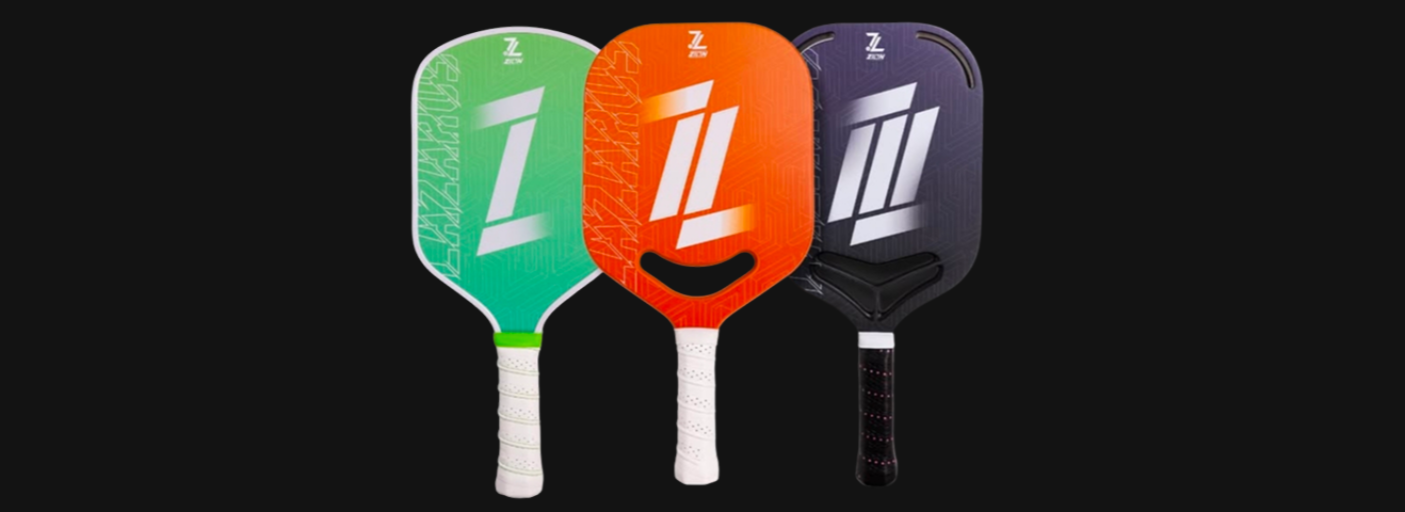
Paddles come in standard, elongated, or wide-body shapes.
Standard: Best for balance and comfort.
Elongated: Offers reach and power, better for advanced players.
Wide-body: Maximizes sweet spot, good for beginners.
FAQ
The right paddle can seriously level up your game—and save you from injuries like pickleball elbow. Start with weight: light paddles offer speed and finesse, heavy ones bring power, and midweight (7.3–8.4 oz) is your safest bet as a beginner.
Core material matters too — polymer is soft and quiet (great for control), Nomex is loud and powerful, while aluminium is light and responsive. For the paddle’s surface, graphite gives control, fiberglass adds spin, and carbon fiber offers a premium feel and accuracy.
Don’t skip the grip size—match it to your hand for comfort and better wrist action. Want to use a two-handed backhand? Look for an elongated handle. Paddle shape also impacts play: wide-body paddles are forgiving, standard shapes offer balance, and elongated ones add reach and spin.
Bottom line: Choose a paddle that fits your hand, your swing, and your skill level. The better it suits you, the better (and longer) you’ll play!